.png?width=200&height=51&name=brandmark-design%20(1).png)


Why Your Follow-Up Process Is Costing You Jobs — And How to Fix It Why Your Follow-Up Process Is...
Handling Price Objections Without Discounting
If you run a service business, you’ve probably heard these lines before:
“That’s a bit expensive.”
“Can you do it any cheaper?”
“XYZ Cleaning/Lawn Care/Tradie quoted me less…”
Price objections are entirely normal—and here’s the good news—they’re almost never really about the dollar figure. Usually, they stem from uncertainty, a lack of full understanding of your services, or simply not yet recognising the true value you offer.
When you know how to handle these price objections effectively, there’s no need to slash your rates. In fact, many home-service businesses across New Zealand and Australia win more profitable jobs simply by communicating their value more clearly and confidently.
This guide shares straightforward, practical strategies (backed by research) to tackle price objections professionally and confidently—without discounting or undervaluing your work.
Why Customers Push Back on Price (Hint: It’s Not Usually the Number)
Research shows that when customers say something is “too expensive,” it often means one of the following:
- They don’t fully grasp the value you provide.
- They’re comparing prices without considering results or outcomes.
- They feel uncertain about the process or what to expect.
- You mentioned the price too early before building value.
- They’ve had a bad experience before and need reassurance.
In industries like cleaning, lawn care, landscaping, auto detailing, or general home maintenance, price objections mostly happen because customers don’t yet know what “quality” really looks like. That’s where you become their trusted guide.
Strategy 1: Acknowledge the Objection Without Getting Defensive
Jumping straight into price justifications is the worst move. Instead, acknowledge the concern calmly—that builds trust and keeps the conversation open.
Try responses like:
- “I understand—happy to walk you through exactly what’s included.”
- “Totally fair question.”
- “It’s important you feel confident about this investment.”
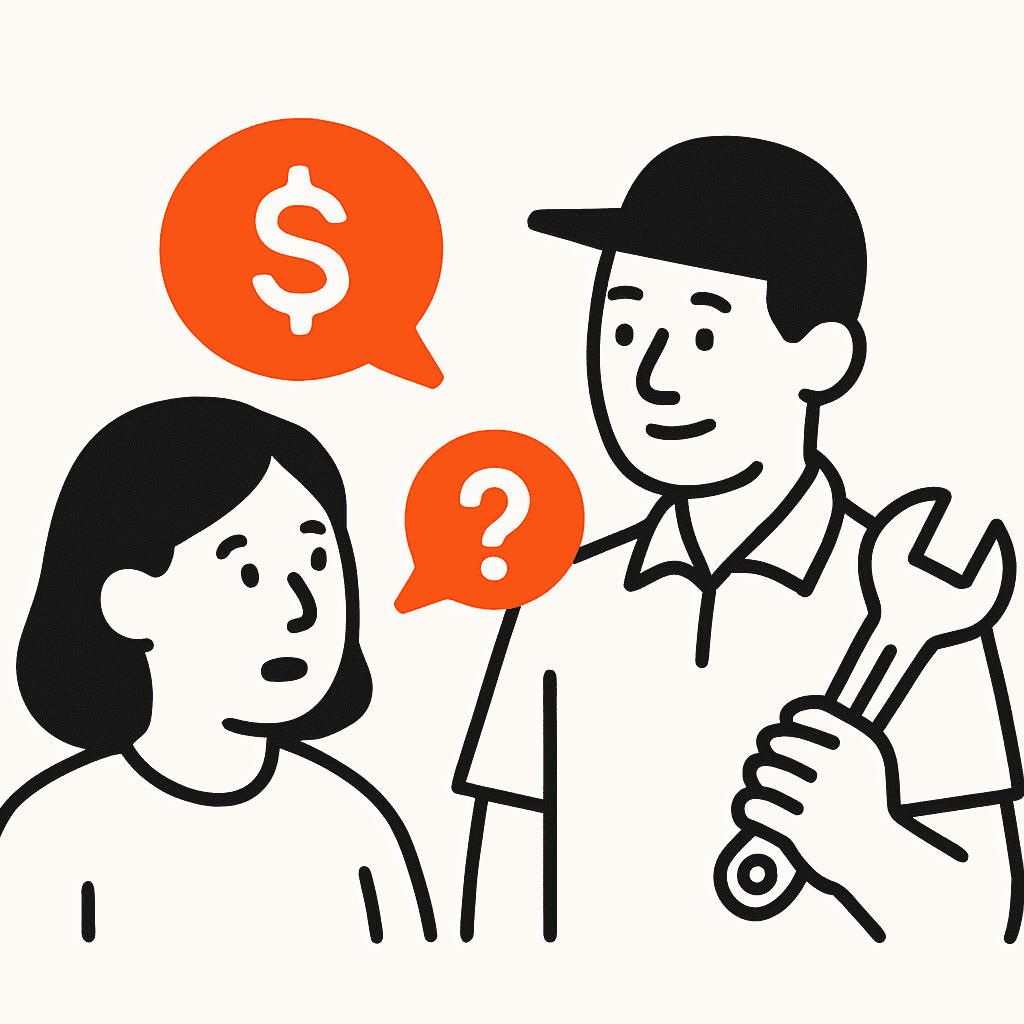
Strategy 2: Ask Clarifying Questions
Usually, the initial objection isn’t the real issue. Asking thoughtful questions uncovers the true concern and opens the door to showing your value.
Try these:
- “What part feels too expensive to you?”
- “Compared to which other options?”
- “Is it a tight budget or ensuring you get the right result?”
This steers the discussion away from just price, helping you understand what your customer truly needs.
Strategy 3: Reframe the Discussion Around Value, Not Cost
Most customers aren’t hunting for the cheapest deal—they want the best outcome for their home, vehicle, or property.
Highlight your value by:
- Breaking down what’s included in your service.
- Explaining the difference between quality service and a cheap shortcut.
- Sharing simple examples—like how regular gutter cleaning prevents costly repairs down the track.
- Talking about your training, safety practices, or high-quality equipment.
For example, a landscaper might say, “Our price includes soil preparation and root conditioning—so your plants thrive long-term, not just look good on day one.”
Strategy 4: Use Social Proof and Real Examples
Stories and proof points work wonders to ease price doubts.
Consider sharing:
- Testimonials, like “Here’s what local homeowners say after switching to us.”
- Before-and-after photos showcasing your work.
- Case studies, for example, “One client went with a cheaper option first and ended up paying double.”
- Repeat-client statistics, such as “Most customers stick with us for years because…”
This reassures customers that choosing quality is both normal—and the smart choice.
Strategy 5: Explain the Difference Between Price and Value
No need to bash competitors, but it’s perfectly fine to clarify what sets you apart.
For example:
“Some operators quote lower because they only cover the basics—we include full prep and cleanup, so you don’t get hit with surprise fees later.”
Many New Zealand and Australian customers appreciate transparency and a comprehensive service over just chasing the cheapest price.
Strategy 6: Offer Options Instead of Discounts
When budgets are tight, avoid jumping straight to discounts. Instead, provide scoped options that keep your core pricing intact.
- Reduce service frequency (e.g., weekly instead of twice weekly visits).
- Offer add-ons separately (like oven cleaning available as an extra).
- Break larger projects into manageable phases.
- Provide basic and premium service packages.
Maintaining price integrity while tailoring your service is the key to sustainable growth.
Strategy 7: Make Your Process Clear and Professional
Customers are much more willing to pay a premium when your quoting, scheduling, and communication feel organised and professional.
Professionalism signals strong value. This is where job management software like Taskly becomes your secret weapon—offering fast quotes, automated follow-ups, clear job details, and easy scheduling that makes customers confident in what they’re paying for.
If you’re ready to level up your quoting and booking process, check out Taskly’s quoting tools and booking management features.
Strategy 8: Handle the Final “Is That Your Best Price?” With Confidence
When you hear “Is that your best price?”, stand firm with calm, professional responses such as:
- “Yes, it reflects the quality of work we deliver and the time it takes to do it properly.”
- “We don’t compete to be the cheapest—we compete to deliver the best results.”
- “If you like, I can show you what’s included so you can compare apples with apples.”
Remember, how you say it matters—if you’re unsure, your customer will sense it too.
Real-World Example: How a Simple Value Shift Saved a Sale
An Auckland cleaning business often lost jobs to cheaper competitors. Instead of lowering their prices, they started emphasizing:
“Our team is fully trained, police-checked, and insured. We use eco-friendly products and include a satisfaction guarantee.”
Focusing on trust and reliability boosted their close rate—and prices stayed the same.
When to Walk Away
If a customer is only chasing the lowest price and won’t recognise your value, it’s okay to let them go. Often, they return after a cheaper operator disappoints.
Your goal isn’t to win every customer—it’s to win the right customers at the right price.
Key Takeaways
- Price objections are normal and rarely personal.
- Stay calm and acknowledge concerns without getting defensive.
- Ask questions to uncover the real issues.
- Shift conversations from price to value.
- Use stories, proof, and professional systems to build trust.
- Offer service options, not discounts.
- Maintain confidence—quality deserves a fair price.
Improve Your Sales Process With Better Quoting and Communication
Many price objections vanish when your business feels organised, professional, and trustworthy from the first interaction. To simplify quoting, scheduling, and customer communications, tools like Taskly can help your service business truly shine.
Discover how Taskly supports home-service businesses with streamlined processes and confident pricing at taskly.co.nz.
Confident pricing begins with confident systems—you deserve to charge what your service is truly worth.